The Relationship Between Nature, Nurture, & Human Diversity

There has been a longstanding debate in the realms of psychology and medicine regarding the factors that influence one’s personality. The age-old question persists: Is it nature or nurture that plays a predominant role? Moreover, how do these two concepts intricately mold the personality and subsequent behavior of each individual? In this blog, we hope explore the intricate relationship among nature, nurture, and human diversity. … Continue reading The Relationship Between Nature, Nurture, & Human Diversity

Brain Structure & Function

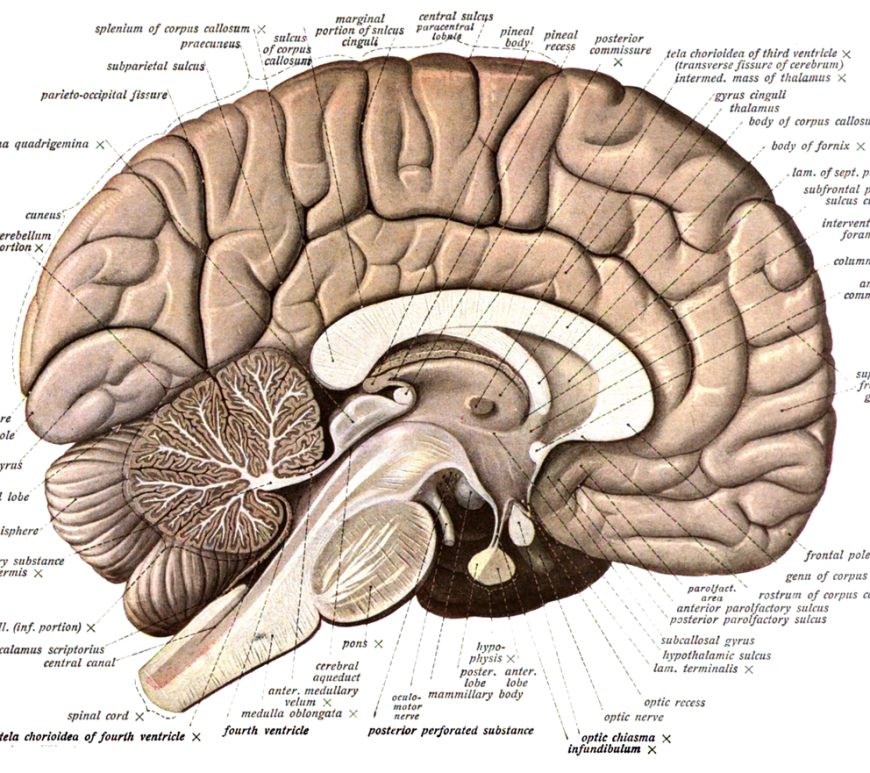
When looking at brain structure and function, the starting point for any learner is understanding the lobes of the brain. There are 4 main lobes – Frontal, Parietal, Temporal, and Occipital. Each lobe of the brain has a distinct function. The frontal lobe is known as the executive portion of our brain because it is in charge of planning, voluntary muscle movements, decision-making, personality, and … Continue reading Brain Structure & Function

The Scientific Method

“Science is a way of knowing – an approach to understanding the natural world” (Campbell Biology). Our insatiable curiosity to learn more about ourselves, other organisms, and our planet has truly become the basis of modern science. The human race’s desire to learn more about the natural world has created the study of science. The word “science” itself derives from a Latin verb meaning “to … Continue reading The Scientific Method

Darwin’s Theory of Natural Selection

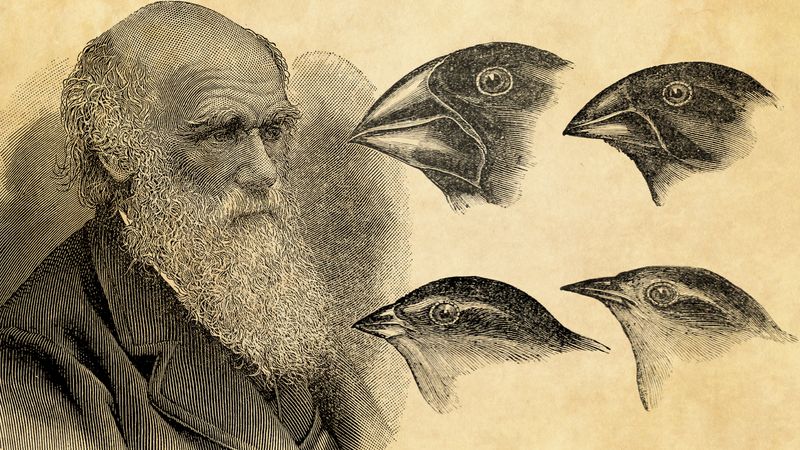
In November of 1859, a novel view of life was first introduced by Charles Darwin through his book, On the Origin of Species by Means of Natural Selection. The influence of the Origin of Species was widespread, and truly redefined scientists’ understanding of the biological processes of life. The Origin of Species articulated two main points:  Current species have emerged from ancestors that had fundamental … Continue reading Darwin’s Theory of Natural Selection

Brain Dominance

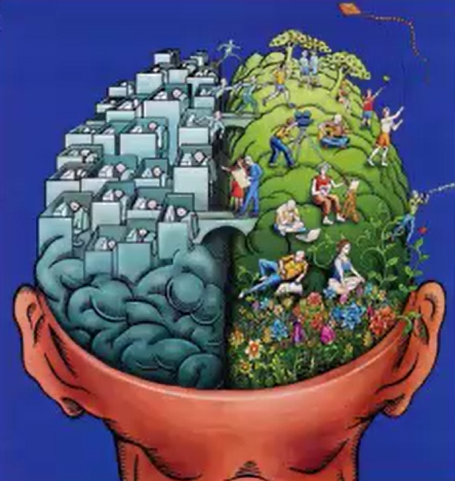
The first brain cell of the body, a neuron, begins in the womb. On the forty-second day of life, the neuron begins to develop. During the next one hundred twenty days, the brain will develop approximately 100 billion neurons at a rate of 9,500 neurons per second. Additionally, about 60 days before birth, each neuron begins to establish connections with other cells.  Unlike any other … Continue reading Brain Dominance

Equilibrium & Potentials

Let us consider a basic schematic membrane, with one side of it being the intracellular side and the other side being the extracellular one. We use a voltmeter, which has a ground electrode that we place outside of the cell and the other end of the electrode that we place inside of the cell, to measure the difference in voltage between the intracellular and extracellular … Continue reading Equilibrium & Potentials

Circulatory Dynamics

Blood needs to leave the ventricles under a certain amount of pressure and at a certain amount for it to properly circulate in the body. The pressure that the blood travels under is dependent on the contraction force of the ventricles as well as the resistance that the head of the blood meets in the arteries and following blood vessels. The main resistance is the … Continue reading Circulatory Dynamics

Evolution & Biological Classifications

Evolution is the one concept that explains everything that we know about organisms today. As fossil records clearly show, life has been evolving on Earth over the course of the last billion years, resulting in diversity between organisms of the past and those of the present. But, along with this diversity, there is also unity in the form of shared features. For example, seahorses, hummingbirds, … Continue reading Evolution & Biological Classifications

Reflexes v. Reactions

A reflex is something that is stereotyped in form, meaning that all members of a certain species will have that same reflex; reflexes can also be recognized in all normal members of a species. As reflexes are built in an organism, they do not need to be learned. Snakes, for example, are born with all of the reflexes they need for survival. They emerge from … Continue reading Reflexes v. Reactions

Diffusion & Electrostatics

To completely understand resting potential, we need to take a look two basic phenomena in nature: diffusion and electrostatics.  Diffusion is the process by which particles spread out or mix, for instance, in a solution. Take for example a beaker of water. Imagine that you drop a bit of dye into the beaker and wait. After the initial ‘splash’ of the dye falling into the … Continue reading Diffusion & Electrostatics