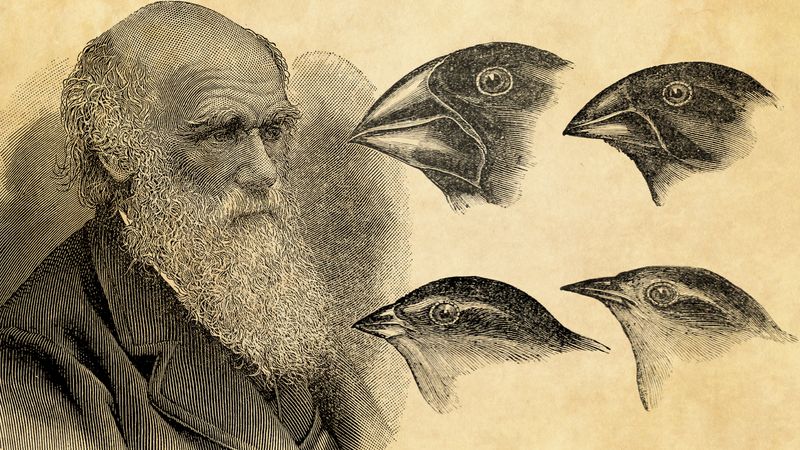
In November of 1859, a novel view of life was first introduced by Charles Darwin through his book, On the Origin of Species by Means of Natural Selection. The influence of the Origin of Species was widespread, and truly redefined scientists’ understanding of the biological processes of life. The Origin of Species articulated two main points:
- Current species have emerged from ancestors that had fundamental differences from them, whether it be in behavior or appearance. This was coined the term, “descent with modification”. This term truly explains the duality of ‘evolution’ as there are similarities and connections between current species and their shared ancestors, but there are also key differences that have developed as a result of each species modifying to fit its environment over time.
- The emergence of current species is governed by the concept of “natural selection”.
It may come as a surprise to many, but the observations that Darwin based his theory of natural selection on were not discovered by him. They were actually revealed by previous scientists and researchers. However, it was Darwin who put together the different ‘puzzle pieces’ of information to establish the theory of natural selection. The three key observations from nature are as follows:
- Individuals in a population present differences in their traits, many of which are inherited through birth.
- A population can produce far more offspring than necessary to survive and carry on the lineage. This observation is a result of the concept that competition between individual organisms is inevitable when the overall population(which is too large) places a stress on the environment.
- Species are suited for the environment that they live in. This is a result of adaptation, as over time, species adapt to survive with the conditions of their environment. A common example of this is how beetles change their outer appearance over time to better evade predators.
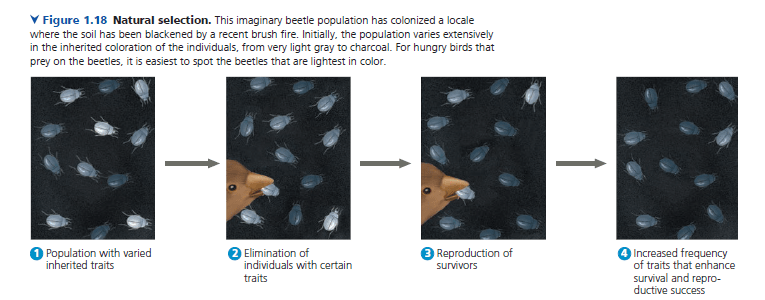
Through piecing these observations together, Darwin was able to formulate the theory of natural selection. He concluded that individuals with inherited traits are more likely to survive and sufficiently reproduce in the local environment, which is the environment that they are most fit to survive in. Over time, a greater proportion of that specific population will have those advantageous traits. Therefore, evolution occurs through the reproductive failures of a species. This leads to individuals of that species better adapting and evolving to fit the circumstances of their environment. When a species fails to reproduce, the surviving members of the species are forced to change in order to survive. This is what leads to adaptation and eventually evolution. This concept, however, is only accurate if the environment remains the same over time. Based on this idea, Darwin called this concept the theory of natural selection because the natural environment is what selects and decides the evolutionary path of a species. Whether or not a species inherits specific traits from its ancestors is completely determined by the environment in which they live and their way of life within that specific environment. For instance, the wings of a bat are a prime example of evolutionary adaptation. Bats are the only mammals with the ability to actively fly (not glide, but actually fly), which is due to the webbing between their ‘extended fingers’. Darwin suggested that this particular adaptation was a result of their environmental factors, such as food sources and predators.
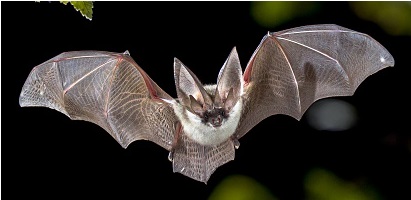
Returning to the bat reference, the skeletal architecture of a bat’s wings is unlike that of feathered birds. This is because bats are classified as mammals. Even though the anatomy of bats is adapted to allow flight, their forelimbs have the exact same bones, joints, and overall structure as the forelimbs of other mammals unable to fly, even humans. This gives us a glimpse of the idea that all mammalian anatomical structures are variations of the “common architecture”. Darwin, in his concept of descent with modification, articulated that the commonalities in the anatomy of mammalian limbs are a sign of the inheritance of limb structure from a single common ancestor. Also known as the “prototype” mammal, the common ancestor is what all other mammals descend from. However, the diversity in forelimb structure results from modification by natural selection over the course of thousands of years in various environments. This view of mammalian descent is supported by the discovery of fossils, as they show how the bone structure is similar between species of the past and those of the present.
Through the combined effects of natural selection over, a common ancestor can give rise to two or more descendant species. For instance, this could occur if one species population was broken up into several subpopulations and were isolated in different environments. As we covered before with natural selection, the subpopulations will gradually radiate into multiple species as they evolve and adapt to the different sets of environmental factors that they are subjected to.
An excellent example of the radiation of new species from a common ancestor is the Galapagos Finches. The Galapagos environment is characterized as a volcanic island home to various species of plants and animals not found anywhere else in the world and in his 1835 exploration of the Galapagos Islands, Darwin collected specimens of the rare Galapagos finches. Scientists, like Darwin, have discovered that Galapagos organisms are directly related to species on the South American mainland. Similarly, Galapagos finches differentiated from their ancestors in South America as their populations adapted to the different environmental factors, such as food, temperature, habitat. Nowadays, researchers further understood the evolutionary relationship between Galapagos finches and their South American counterparts through anatomical and geographic data and more recently, DNA sequence comparisons.

Biologists have found that the best way to represent evolutionary relationships is through sideways tree diagrams. Just as individual genealogy is diagrammed in a family tree, evolutionary relationship diagrams are also drawn in a tree-like structure, with each species as a branch of the tree. To give you a holistic view of this diagram, the trunk of the tree starts with the single ancestor species, which begins to branch out into subspecies over time. The tree continues to branch out as new species are discovered and the new species are related back to the common ancestor through other more recent species. Additionally, species that are very similar share recent common ancestors. Through ancestors farther in the past, Galapagos finches have been found to be related to sparrows, hawks, and even penguins. Moreover, finches and all other birds are related to one another through even more ancient ancestors. If we follow the evolutionary tree even further back in time, we can see the early prokaryotes that inhabited Earth around 3 billion years ago. If we go even further back, we can identify the universal genetic code and its connection to ALL living species. Therefore, all life forms are connected to one another through evolutionary history over billions of years.
In the next basic biology blog, we will be covering an integral component of biology – the scientific process. Not only will we go over how scientists make observations and form and test hypotheses, but also how they draw conclusions.

