When most people think about the immune system, they think about antibodies, vaccines, or white blood cells. However, one of the most important cells in the entire immune system is a cell called the macrophage.
The term macrophage comes from Greek words meaning “big eater,” which is a fitting name because one of its primary jobs is to literally engulf and digest unwanted material. But as we will see, macrophages do much more than just eat germs. They help decide when an immune response should begin, communicate with other immune cells, clean up dead tissue, and even help repair damage after an infection has been cleared.
The First Responders of the Immune System
Our bodies are constantly exposed to bacteria, viruses, fungi, and other potentially harmful organisms. Fortunately, we have an innate immune system, which is the branch of immunity that responds immediately to potential threats without needing prior exposure. Macrophages are one of the key players in this first line of defense.
Think of macrophages as highly trained security guards patrolling the body. They are constantly looking for signs that something does not belong. They do this using specialized receptors that recognize common features found on microbes but not on healthy human cells. When macrophages detect these warning signs, they quickly spring into action.
Eating the Enemy
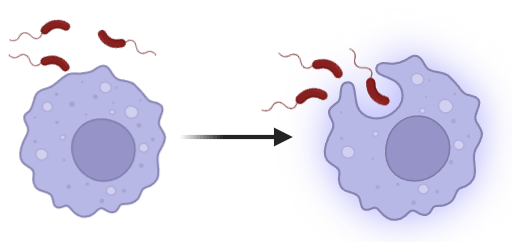
One of the most famous functions of macrophages is phagocytosis. Phagocytosis is simply the process by which a cell surrounds, engulfs, and digests another particle. In everyday language, it is cellular eating.
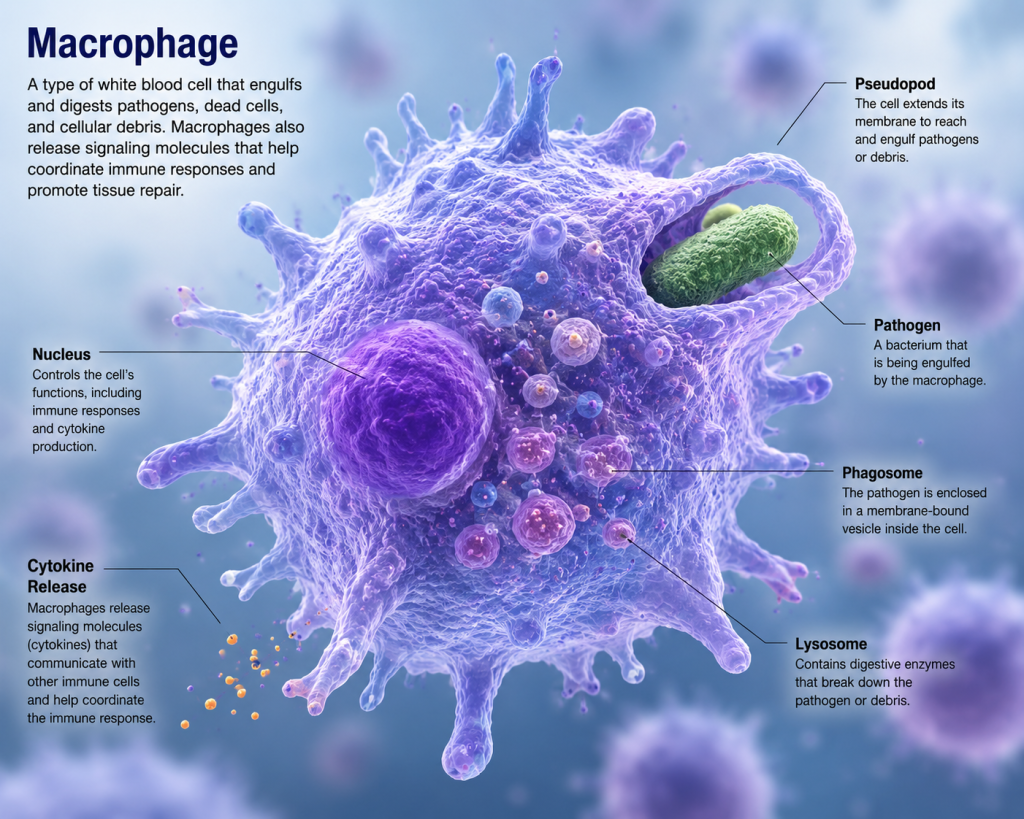
When a macrophage encounters a bacterium, it can wrap itself around the microorganism and pull it inside. The captured microbe is then broken down using powerful enzymes and other antimicrobial substances. This allows the macrophage to remove harmful invaders before they have a chance to spread.
This process is so important that many disease-causing organisms have evolved ways to avoid being eaten by macrophages. In many cases, the battle between a pathogen and the immune system begins with the macrophage.
More Than Just a Garbage Collector
If macrophages only ate microbes, they would already be impressive. However, their responsibilities extend much further.
Macrophages also help remove dead and dying cells from our tissues. Every day, billions of cells in the human body naturally reach the end of their lifespan and need to be removed. Macrophages quietly clean up this cellular debris before it can cause problems.
In a sense, macrophages act as the body’s sanitation department. They help keep tissues healthy by removing material that is no longer useful.
Interestingly, macrophages can also detect signs of tissue injury. When cells die in an uncontrolled manner due to trauma or infection, they release molecules that signal danger. These danger signals alert macrophages that something is wrong and help initiate an immune response.
Calling for Backup
Macrophages are not lone warriors. They are also excellent communicators.
When macrophages detect an infection, they release chemical messengers called cytokines. Cytokines are proteins that allow immune cells to communicate with one another. You can think of them as emergency text messages sent throughout the immune system.
These messages can:
- Recruit additional immune cells to the site of infection.
- Increase inflammation.
- Activate nearby immune cells.
- Help determine what type of immune response is needed.
Without these communication signals, the immune system would struggle to coordinate an effective defense.
Macrophages Train Other Immune Cells
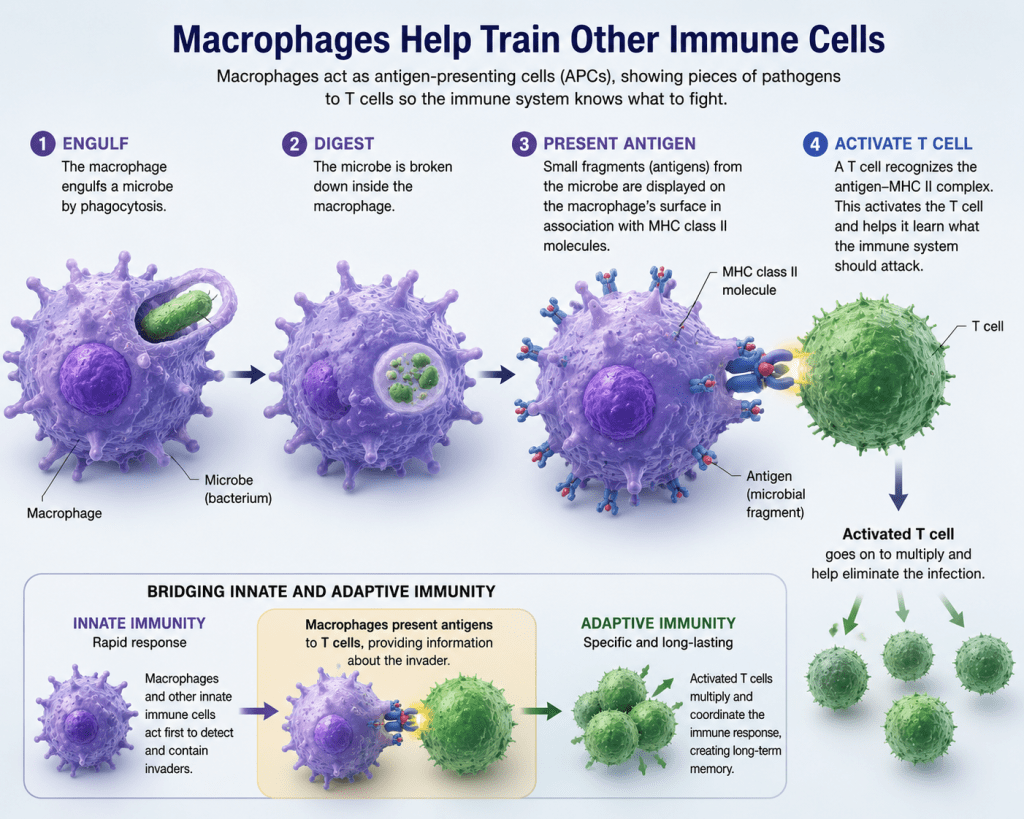
Another remarkable feature of macrophages is that they can act as antigen-presenting cells.
That phrase sounds intimidating, but the concept is actually straightforward.
After digesting a microorganism, a macrophage can display small fragments of that microbe on its surface. These fragments are called antigens, which are simply pieces of a foreign substance that the immune system can recognize. Other immune cells, particularly T cells, can inspect these displayed fragments and learn what they are fighting.
In other words, macrophages do not just catch the criminal. They also provide a photograph of the suspect to the rest of the immune system.
This function helps bridge the gap between the innate immune system, which responds rapidly, and the adaptive immune system, which develops highly specific responses and long-term immune memory.
Not All Macrophages Behave the Same Way
One of the fascinating discoveries in modern immunology is that macrophages are highly adaptable.
Depending on the signals they receive from their environment, macrophages can adopt different functional states. Some become highly inflammatory and specialize in attacking microbes. Others become more focused on reducing inflammation and promoting tissue repair. Researchers often refer to these broad categories as M1 and M2 macrophages, although the reality appears to be much more complex than a simple two-category system.
This flexibility allows macrophages to respond appropriately to different situations. Fighting an infection requires a very different strategy than healing a wound.
Why Macrophages Matter
The more scientists learn about macrophages, the more important these cells appear to be.
Macrophages help eliminate pathogens, remove dead cells, coordinate immune responses, activate other immune cells, and support tissue repair. They are involved in infections, autoimmune diseases, cancer, wound healing, and many other biological processes.
If the immune system were a city, macrophages would be the sanitation workers, police officers, emergency dispatchers, detectives, and maintenance crews all rolled into one.
That is quite a lot of responsibility for a single cell type.
The next time you recover from a minor infection, heal from a scrape, or simply go about your day without getting sick, remember that countless macrophages are working behind the scenes to keep your body safe, clean, and functioning properly. They may not get as much attention as antibodies or vaccines, but they are among the true workhorses of the immune system.
In our next BioLogically Blog, we’ll meet another important immune cell: the monocyte, often considered the precursor to the macrophage and a key player in the body’s defense system.
References
Delves, P. J., Martin, S. J., Burton, D. R., & Roitt, I. M. (2017). Roitt’s Essential Immunology (13th ed.). Wiley-Blackwell.

