Theories vs Speculations

Have you ever considered explanations for why the Earth is spherical or why there are so many animals in the world? You might propose a “theory” to explain these phenomena or the nature of existence itself. However, your use of the word “theory” is incorrect. In society, the word “theory” often implies speculation or hypothesis. However, its meaning in science differs significantly. There are three … Continue reading Theories vs Speculations

The Basics of Scientific Experimentation

In the previous Basic Biology blog titled The Scientific Method, we explored the fundamentals of the scientific method, a structured approach that scientists employ to drive discovery and expand our understanding of the natural world. While the method outlines a systematic sequence of steps, in practice, scientific inquiry often deviates from this rigid framework. A notable example arises when researchers embark on experiments only to … Continue reading The Basics of Scientific Experimentation

The Scientific Method

“Science is a way of knowing – an approach to understanding the natural world” (Campbell Biology). Our insatiable curiosity to learn more about ourselves, other organisms, and our planet has truly become the basis of modern science. The human race’s desire to learn more about the natural world has created the study of science. The word “science” itself derives from a Latin verb meaning “to … Continue reading The Scientific Method

Darwin’s Theory of Natural Selection

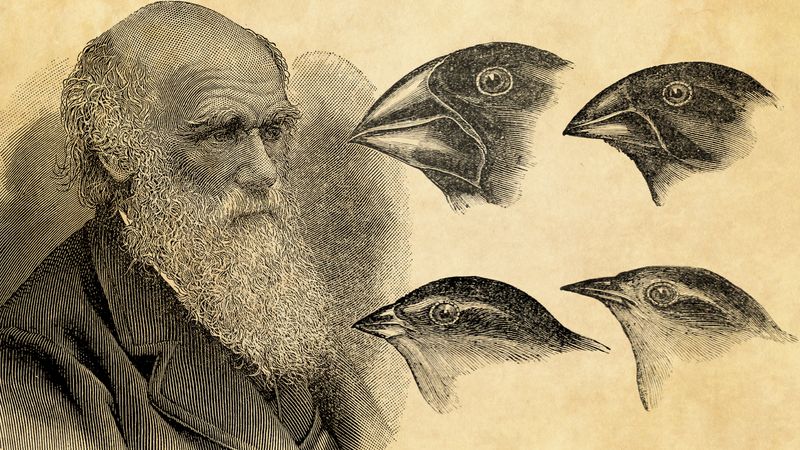
In November of 1859, a novel view of life was first introduced by Charles Darwin through his book, On the Origin of Species by Means of Natural Selection. The influence of the Origin of Species was widespread, and truly redefined scientists’ understanding of the biological processes of life. The Origin of Species articulated two main points:  Current species have emerged from ancestors that had fundamental … Continue reading Darwin’s Theory of Natural Selection

Evolution & Biological Classifications

Evolution is the one concept that explains everything that we know about organisms today. As fossil records clearly show, life has been evolving on Earth over the course of the last billion years, resulting in diversity between organisms of the past and those of the present. But, along with this diversity, there is also unity in the form of shared features. For example, seahorses, hummingbirds, … Continue reading Evolution & Biological Classifications

Transformation of Energy, Biological Systems, & Environmental Interactions

The fundamental characteristic of all living organisms is their use of energy to carry out life’s activities. Moving, growing, reproducing, and other cellular activities all require energy. The input of energy from the sun, and the transformation of that energy from one form to another is what makes life possible. For example, plants absorb energy from the sun through their leaves, but the energy does … Continue reading Transformation of Energy, Biological Systems, & Environmental Interactions

Cellular Processes

The cell is the smallest unit of biological organization that can perform all the activities necessary for life. In the 1830s, the famous cell theory was first developed by botanist Mathias Schleiden and zoologist Theodore Schwann. The theory states that all living organisms are composed of the basic units of life, cells, and all organism’s actions are propelled by the cell’s functions. For example, your … Continue reading Cellular Processes

The Study of Life

Biology is the study of living organisms, including their interactions, chemical processes, physical structure, molecular workings, development, and evolution. Biology is such a broad field that it is broken down into several specific branches, such as microbiology, zoology, botany, anatomy, and physiology. Contemporary biological discoveries are being made every day, with each discovery bringing us as a society closer to understanding the secrets of biology, … Continue reading The Study of Life