Connective Tissue: The Body’s Structural Network (Tissues Part 2)

When we think of tissues in the body, most people picture muscles that move us or skin that protects us; but one of the most versatile and essential types of tissue is connective tissue, which is the biological “glue” that holds everything together within our body. Connective tissue doesn’t just bind and support; it cushions, protects, stores energy, transports nutrients, and even helps fight infections. … Continue reading Connective Tissue: The Body’s Structural Network (Tissues Part 2)

How Tiny Cells Build a Working Human (Tissues Part 1)

Why Tissues Matter If you’ve ever looked through a microscope, you know that cells are tiny, but together, they form the very fabric of life. In the human body, these microscopic building blocks don’t just float around on their own; they team up to form tissues, which are organized groups of similar cells working toward a common goal. Broadly, the body relies on four major … Continue reading How Tiny Cells Build a Working Human (Tissues Part 1)

The Endocrine System — Your Body’s Silent Messenger Network

Imagine a world-class orchestra playing a flawless symphony. Every instrument—the strings, the brass, the percussion—follows the conductor’s cue in perfect timing to create harmony. Now imagine your body doing the very same thing, only instead of instruments, it is made up of organs, cells, and hormones. Its conductor is the endocrine system. Welcome to the backstage controls of your body’s most overlooked system—one that discreetly sends chemical messages that regulate everything from your sleep and metabolism to your ability to grow. What … Continue reading The Endocrine System — Your Body’s Silent Messenger Network

How Your Body Protects and Powers Every Inhale and Exhale

We’ve now followed oxygen’s journey from the nose to the alveoli, where it enters the bloodstream and carbon dioxide exits. But we haven’t yet explored the powerful mechanisms and protective structures that make this exchange possible. Breathing isn’t just about lungs—it’s about muscles, bones, membranes, and pressure gradients, all working in harmony to keep air moving in and out of your body. Let’s take a … Continue reading How Your Body Protects and Powers Every Inhale and Exhale

Journey Through the Lower Respiratory Tract and Gas Exchange Structures

Welcome back to our deep dive into the respiratory system! In Part 1, we explored how your nose, pharynx, and larynx work together to warm, filter, and humidify the air you breathe. Now, we descend further into the lungs, tracing the path of oxygen from your throat to the smallest air sacs in your body. This is where gas exchange—perhaps the most critical function for … Continue reading Journey Through the Lower Respiratory Tract and Gas Exchange Structures

A Breath of Life: Exploring the Upper Respiratory Tract

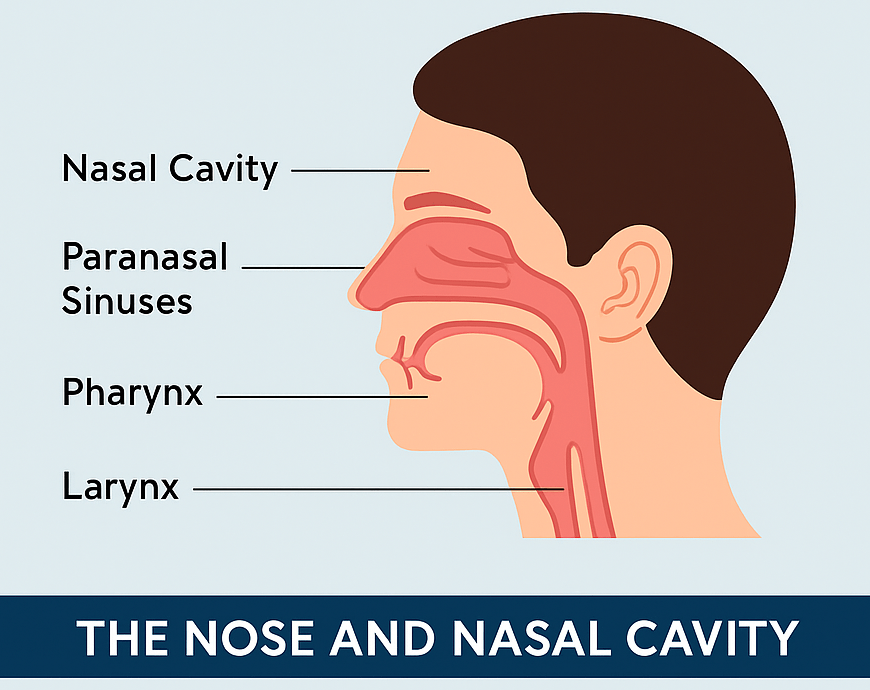
Have you ever stopped to think about how your body breathes—how oxygen gets into your bloodstream or how your lungs know when to inhale or exhale? Breathing is such an automatic part of life that we rarely give it a second thought. But behind each breath is a complex and beautifully coordinated system—the respiratory system—working tirelessly to keep us alive. Let’s begin our journey through … Continue reading A Breath of Life: Exploring the Upper Respiratory Tract

Blood Groups & Fluid Exchange

World War I, known as the Great War, resulting in approximately 40 million deaths, marked a pivotal moment in our understanding of the significance of blood transfusions. The sudden loss of large volumes of blood, often due to acute traumas like gunshot wounds or amputations, is typically fatal. However, the practice of transfusing blood from a healthy individual, who can withstand the loss of 1-2 … Continue reading Blood Groups & Fluid Exchange

The Blood & Lymph

Blood serves as the primary transporter of nutrients to the billions of cells within the human body. Regardless of the individual functions of each cell, such as the contracting ability of cardiomyocytes, all cells depend on the nutrients and materials provided by the circulating bloodstream. Plasma, comprising over one-half of the blood’s volume, is the fluid component containing many substances essential for blood function. The … Continue reading The Blood & Lymph

Circulatory Dynamics

Blood needs to leave the ventricles under a certain amount of pressure and at a certain amount for it to properly circulate in the body. The pressure that the blood travels under is dependent on the contraction force of the ventricles as well as the resistance that the head of the blood meets in the arteries and following blood vessels. The main resistance is the … Continue reading Circulatory Dynamics

Blood Vessels

Blood flows through a closed system. Blood always travels through blood vessels except when it enters the chambers of the heart. When blood is pumped from the heart, it travels through five types of blood vessels – arteries, arterioles, capillaries, venules, and finally veins. Arteries are the first type of blood vessels that blood enters after being pumped out of the heart, and when the … Continue reading Blood Vessels