Have you ever wondered why a small cut doesn’t make you sick? Or how your body heals from serious illnesses? Your current state of health is governed by your immune system, your body’s dual-layered defense mechanism that safeguards you from external threats while also preventing internal self-attacks. The Immunology Blogs will delve deep into the study of immunology, beginning with fundamental concepts and advancing to more intricate biological phenomena. The role of the immune system is straightforward: kill the pathogen without harming the host. However, immunology becomes complex when things go awry. For example, 1) failing to eliminate pathogens quickly enough leads to infections, and 2) mistakenly attacking our own tissues results in autoimmune disorders.
To embark on the study of immunology, here are some guiding questions:
- Why do we typically only contract certain diseases once?
- How does the immune system achieve a sophisticated organization that can detect a wide range of pathogens with high sensitivity and specificity, despite having limited DNA coding?
- Why do immune responses mount more swiftly and intensely upon subsequent encounters with a pathogen?
- How does the immune system maintain high sensitivity and specificity in recognizing diverse pathogens while avoiding attacks on self-tissues?
- What makes T cells and B cells effective against distinct types of pathogens, and how do these cell types differ in their recognition of antigens?

Now, let’s delve into a case study that illuminates the complexities of immunology. David, known as the Boy in the Bubble, was born without a functioning immune system. Tragically, his two older siblings had also succumbed to infections early in life, indicating a profound immunodeficiency. Recognizing the high likelihood that David would face the same fate, doctors took proactive measures during his mother’s pregnancy. Knowing that without a functional immune system, David would be unable to fend off pathogens, they opted for a C-section birth and placed him in a sterile, controlled environment from the moment he entered the world.David lived his life inside a plastic bubble where every breath was filtered, and his food meticulously sterilized. Even the mildest pathogen posed a lethal threat to him. Interestingly, David’s congenital immunodeficiency mirrored the acquired immunodeficiency seen in individuals infected with HIV, although his condition was present from birth rather than acquired later in life. At the age of 16, David was offered a chance at survival through a bone marrow transplant from a matched unrelated donor, which could potentially provide him with a new immune system. However, given the early stage of bone marrow therapy development and limited understanding of potential complications like TA-TMA and VOD, David succumbed to infections and passed away. His story emphasizes both the challenges and the ongoing advancements in the field of immunology and medical treatment.
Now, you might be curious about the origins of immunology. It all began with the smallpox epidemic. Smallpox had a mortality rate of 30%, meaning only 70% of those infected survived. During the smallpox epidemic, a crucial observation was made: among those who survived smallpox infection, the majority never contracted smallpox again. This pivotal observation underscores a fundamental principle of the immune system – once infected, immunity follows (derived from the Latin “immunitas,” meaning exemption from civic duties). One of the earliest forms of a “vaccine” against smallpox was developed in China. Children were exposed to powdered material from scabs of smallpox lesions. Those who underwent this procedure were subsequently protected from smallpox infection. This method resembled the modern practice of attenuating viruses to create vaccines. However, there remained a small percentage of children who still contracted smallpox through this method, as the virus retained some potency even when weakened.

The smallpox vaccine was actually developed by Edward Jenner. In Gloucestershire, England, Jenner observed that milkmaids who contracted cowpox (a milder virus similar to smallpox) did not subsequently get smallpox. Inspired by this, Jenner extracted material from cowpox lesions and inoculated it into a young boy. When exposed to smallpox later, the boy did not contract the disease, indicating immunity. This breakthrough formed the basis of the smallpox vaccine. The vaccine’s efficacy stemmed from the fact that smallpox only infects humans, so by eradicating the disease in the human population, it had nowhere else to persist.
Now that we’ve explored the history of immunology, let’s consider a crucial question: What constitutes a well-designed immune system? Fundamentally, an effective immune system must be multi-layered to ensure robust protection. The key to security lies in having multiple layers; relying solely on a single guard or security agent leaves you vulnerable. Conversely, multiple checkpoints reduce the likelihood of infiltration and successful pathogen attacks.
| Innate | Acquired (aka adaptive) | |
| Barrier | Skin | Mucosal Immunity |
| Soluble Protein | Complement | Antibodies |
| Cells | Phagocytes | T & B cells |
| Mediators | IL-1, TNF | INF-gamma |
The innate immune system is the initial responder to pathogens, characterized by its readiness and preparedness to defend against threats, despite its relatively low complexity. In contrast, the acquired immune system, also known as the adaptive immune system, is more sophisticated and specific than the innate system. However, it requires more time to become activated and provide protection to the body. Both the innate and acquired immune systems operate across multiple layers and employ different strategies to safeguard the body. Nevertheless, they differ significantly in their specific methods of protecting against pathogens.
The primary component of any protective system is a barrier that prevents pathogens from entering the body. In the innate immune system, this barrier is provided by the skin. A compelling illustration of the skin’s critical role in immunity is evident in burn patients, who are susceptible to infections due to the absence of intact skin that normally prevents pathogens from entering and causing infection. Upon severe burns, doctors promptly advise covering the affected area with antibiotic cream and sterile gauze pads to shield against pathogens. The rarity of intact skin infections underscores its effectiveness in preventing infections; chances are you’re not currently infected because your skin is intact. However, a cut exposed to an unclean environment can allow pathogens to infiltrate and cause infection. In contrast, the adaptive immune system relies on mucosal membranes as its protective barrier. A notable example of this is found inside our mouths.
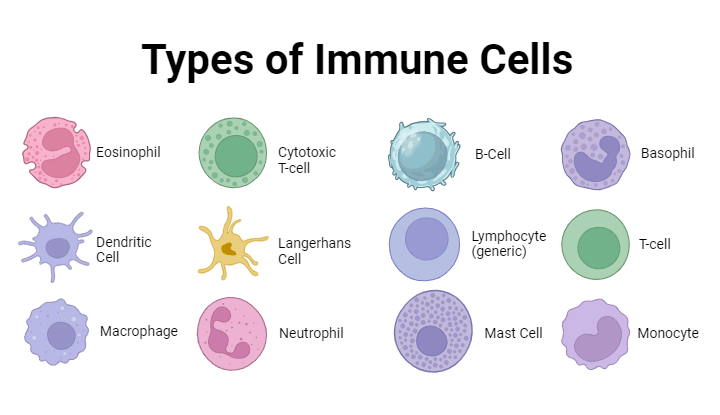
Another crucial aspect of the immune system’s functionality lies in its cellular components. To combat invading molecules, the immune system employs phagocytes, specifically macrophages and dendritic cells. These cells do not differentiate between various types of pathogens or foreign bodies; instead, they recognize if something is foreign and initiate engulfment and digestion of the foreign molecule. In contrast, the acquired immune system utilizes lymphocytes, T and B cells, which exhibit high specificity. They are capable of distinguishing between different types of foreign invaders and can generate various types of effector cells (such as T-cells) and proteins (like antibodies) that are specialized to combat and eliminate diverse pathogens.
The intricacies of immune biology contribute to the fascination of studying this field. Having laid the foundation of immunology, we can now delve deeper into the immune system’s mechanisms and functions in future blogs. Our upcoming Immunology Blog will explore the biological basis of the immune system’s specificity!
 BioLogically