
Abraham Maslow’s pioneering theory on the Hierarchy of Human Needs remains a cornerstone in psychology, providing a framework to understand the intricate interplay between basic survival instincts and higher aspirations for personal fulfillment. Maslow’s conceptualization elucidates that before individuals can embark on the journey towards self-actualization, they must first address fundamental physiological requirements. This hierarchical structure, often depicted as a pyramid, defines a progression from essential survival needs to the pursuit of self-fulfillment. By exploring this hierarchy, one gains profound insights into the intricacies of human motivation and behavior.
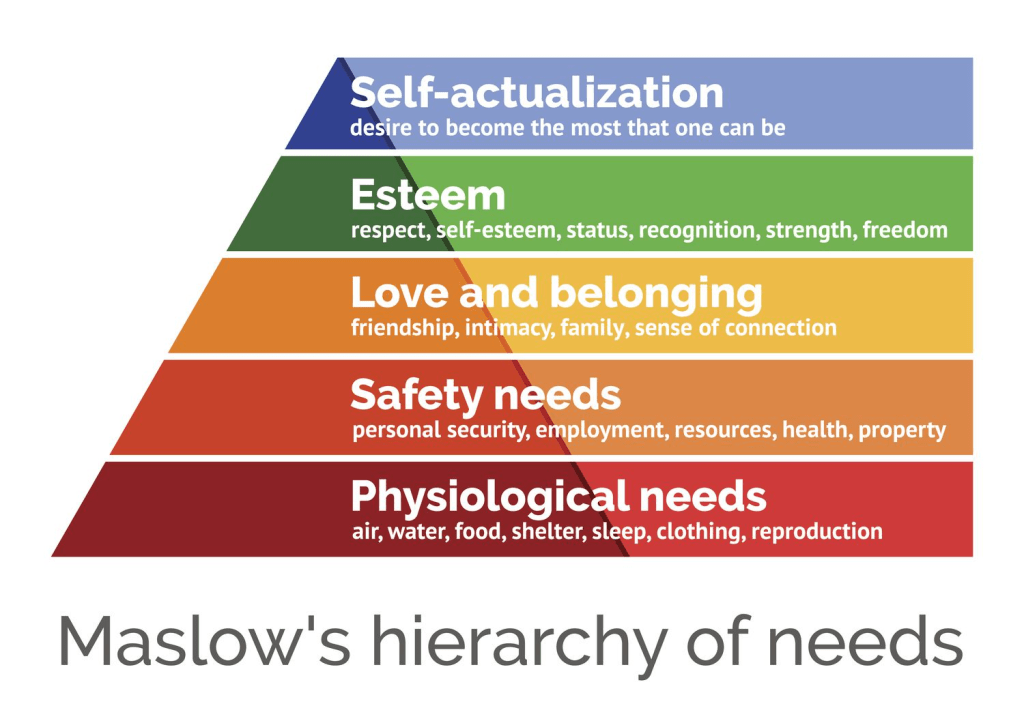
Physiological needs, which constitute the foremost requirement for humans, encompass the essential components necessary for life and survival. Failure to fulfill these needs will result in death. These physiological needs include:
- Food/Water
- Oxygen
- Sleep
- Protection from extreme temperatures
- Sensory needs
- Motor needs

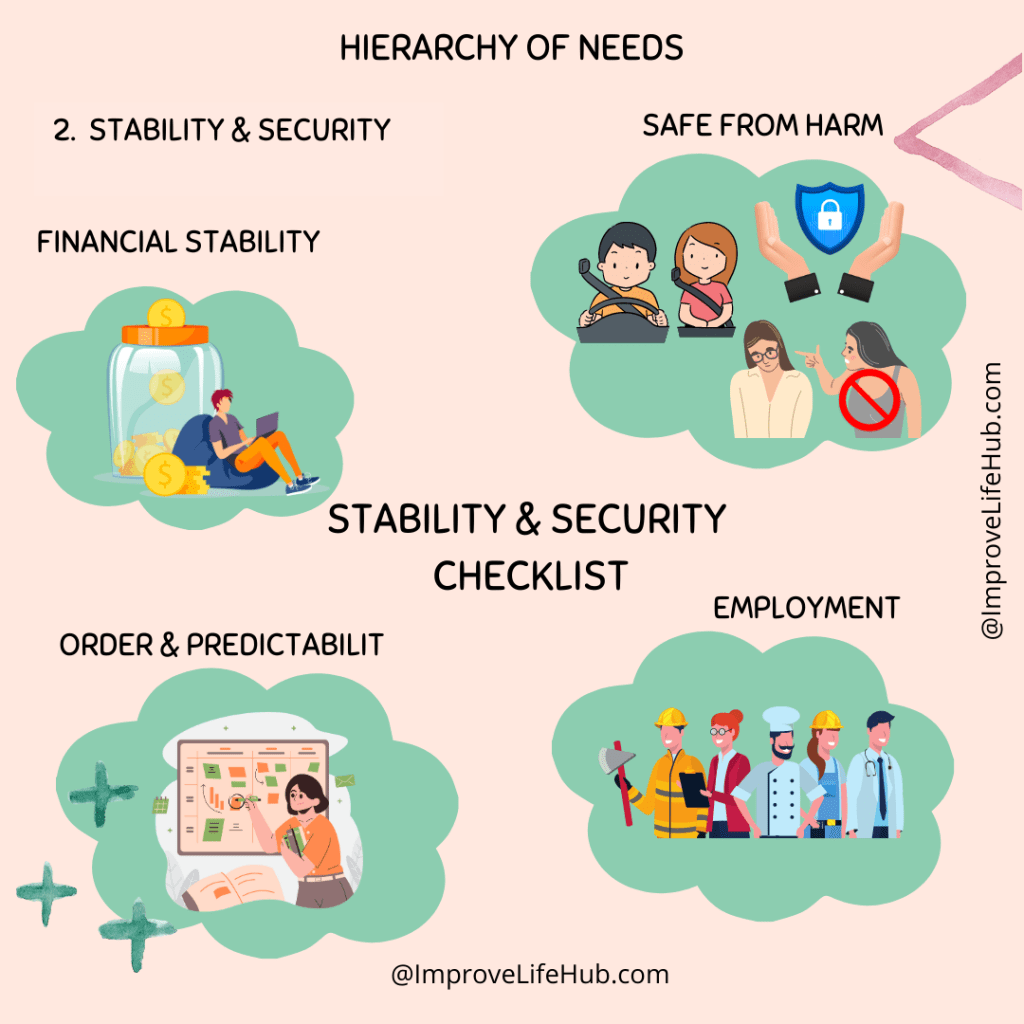
The next level of human needs includes safety/security. This includes the need to be free from anxiety and fear, suggesting that a safe environment is integral to achieving this level of need. A safe environment must incorporate order and a routine. There are 3 types of securities that need to be met:
- Personal Security – do I feel that I am physically safe and away from harm
- Financial Security – do I feel that I have enough money to provide for myself
- Health & Wellbeing – do I feel that I am mentally and physically healthy enough to live

The tier above safety/security is the need for love, affection, and belonging. Love manifests in various forms, including social acceptance, friendship, familial stability, and intimacy. Receiving love fosters a sense of belonging and the capacity to connect authentically with others and their emotions. Deprivation of love undermines this sense of belonging. Additionally, integral to this category of needs is not only the ability to receive love but also to reciprocate it.

The fourth tier of the hierarchy is self-esteem, characterized by a sense of importance and worthiness. This category encompasses concepts such as respect, approval, and appreciation. Individuals pursue activities that yield achievement, success, and recognition, thereby bolstering their self-esteem. Furthermore, accomplishments confer status, further enhancing one’s sense of self-worth. Successes contribute to the development of self-confidence, motivating individuals to align their actions with their aspirations for the future. Researchers have identified a correlation between success and self-esteem, suggesting that individuals grappling with low self-esteem tend to encounter greater challenges in achieving success as they perceive themselves as unable to meet their goals.
The pinnacle of Maslow’s Hierarchy of Needs is self-actualization, representing a journey of self-discovery where individuals reach their fullest potential and perceive themselves as having attained the highest version of themselves. Self-actualization entails the development of confidence, enabling individuals to authentically express their beliefs, and fostering a willingness to extend support to others. Interestingly, many individuals never reach this stage in life, as perpetual dissatisfaction often propels them to continually strive for self-improvement. While self-actualization stands as a commendable goal, it can only be achieved if the lower-level needs within the hierarchy are first fulfilled. Moreover, self-actualization typically emerges later in life as a wealth of life experiences is needed for individuals to attain a profound sense of self-satisfaction and acceptance.

Meeting our human needs often involves a process of trial and error, wherein individuals learn what does or doesn’t fulfill their requirements. If an initial attempt, such as trying out an activity or joining a group, fails to meet one’s needs, individuals can explore alternative options and seek out different social circles. Direct methods serve as effective means for progressing up the hierarchy of needs. These include diligent effort, setting attainable objectives, collaborating with others, and conducting thorough self-assessment. Conversely, indirect methods, while occasionally useful for coping with specific situations, can prove detrimental when overused. Examples of such methods include suppression, projection, denial, rationalization, and compensation. While these tactics can be effective when employed situationally, excessive reliance on them can adversely impact both mental and physical well-being. In our next biopsychology blog, we will discuss potential careers in the field of biopsychology!
 BioLogically