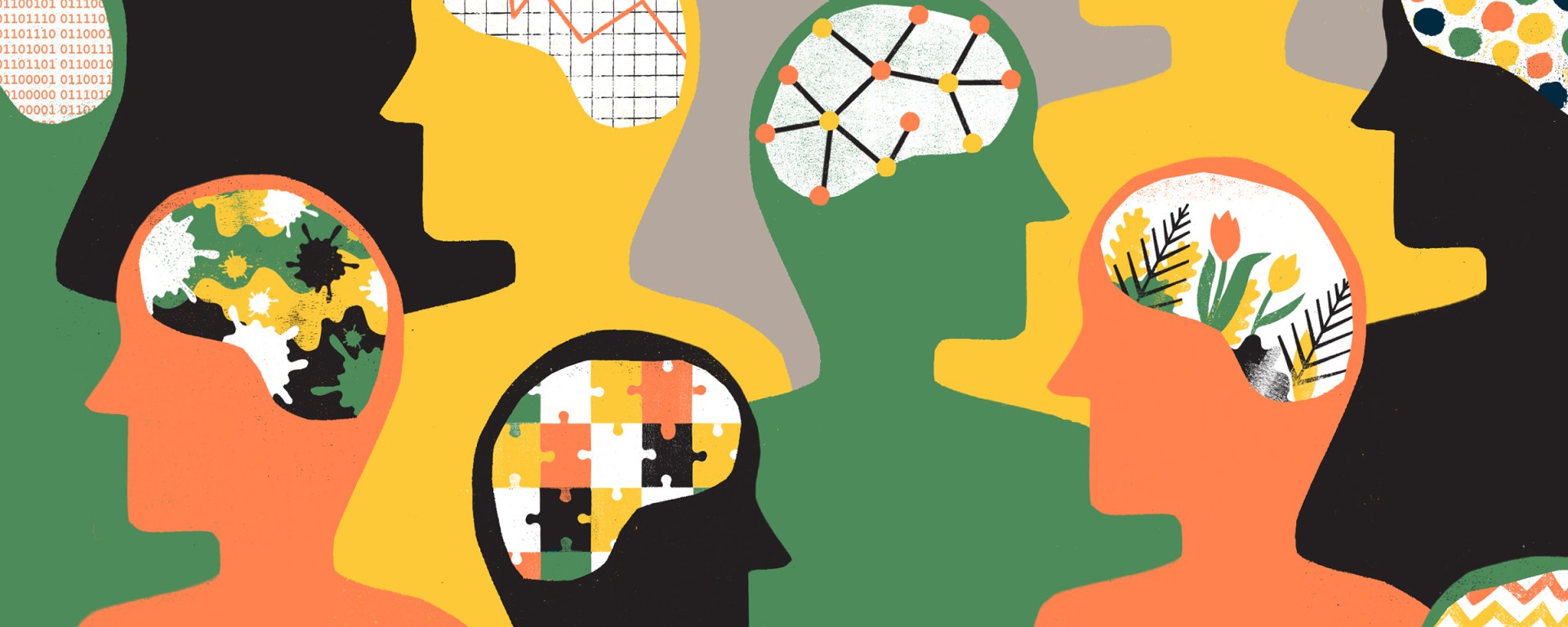
Every individual is unique, whether in ethnicity, hair color, academic interests, or career paths. Yet, among these distinctions, personality stands out as one of the most defining factors. As explored in the previous Biopsychology blog, personality encompasses a person’s patterns of thinking, feeling, and behaving. Over the past century, numerous psychologists have formulated theories in an attempt to unravel the mysteries behind the development of personality. Let’s delve into the myriad of personality theories and their interpretations of individuality.
- Trait Theories of Personality – Psychologists specializing in the Trait Theory believe that people’s personalities can be described by specifying their main characteristics, also known as traits. Traits like honesty, laziness, ambition, and personability are thought to be stable and constant over the course of one’s life as well as presented in every situation in one’s life. Therefore, if an individual presents as honest while they are in elementary school, they are projected to maintain that honest character trait for the remainder of their life. The most significant criticism of trait theory is that it fails to take into account the importance of the situation or the context that personality is presented in. For instance, Dwayne the Rock Johnson’s personality will be different when he is in the wrestling ring from when he is with his family. These key differences in personality are not accounted for in this theory.
- Nomothetic Theory of Personality – Through this theory, psychologists argue that the same set of traits can be used to describe all people’s personalities. These 5 main personality traits include extraversion, agreeableness, conscientiousness, openness to experience, and emotional stability. One’s affinity for these five personality traits is measured on a scale of introversion to extroversion. A factor analysis is then used to determine the clusters/scores of individuals on the introversion to extroversion scale, which contributes to concluding an individual’s personality designation.
- Idiographic Theory of Personality – Psychologists claim that using the same set of traits to classify everyone is impossible as each person may have a few traits that are unique to them. This theory is the direct opposite of the Nomothetic Theory. For instance, one person may be described as selfish, but this description wouldn’t necessarily accurately describe another, and therefore, this same character trait can not accurately be used to describe one’s personality. A notable idiographic theorist is Gordon Allport, who coined the phrase “cardinal dispositions,” also known as “cardinal traits.” Cardinal dispositions define a personality trait that is so notable about an individual that it dominates or defines their life to others. Allport suggests that cardinal traits tend to only emerge in the later stages of life, and when they are present in adults, they are unique to and define the types of thoughts, emotions, and behaviors that one experiences.
- Biological Theories of Personality – Psychologists believe that personality is inherited from parents and ancestors, and one aspect of their agenda is to determine the percentage of personality inherited from parents. As of now, a defined estimate on the percentage of personality inherited has not been made, but researchers have concluded that temperaments are stable in an individual from the time they are an infant to when their are old.
- Somatotype Theory of Personality – This is a subset within the class of biological theories of personalities established by William Sheldon, who argues that body shape and physiological characteristics influence and are influenced by personality. In his founding study, Sheldon concluded that endomorphs (larger individuals) tend to be more friendly and outgoing while mesomorphs (muscular individuals) tend to be more aggressive. On the other hand, ectomorphs (thin individuals) tend to be more shy and secretive. The conclusions of this experiment have not yet been validated by the scientific community as this study as not yet been replicated. Therefore, there are concerns about the reliability of these body shape and personality pairings.
- Behaviorist Theory of Personality – Utilizing this theory, psychologists argue that personality is a fluid aspect of an individual. One’s personality can change according to the environment, such as through the action and consequences of reinforcers or punishments. An individual’s personality can be trained to reflect certain characteristics based on whether they receive praise or scolding. This idea is commonly seen in parenting strategies. The basic principle of this theory is that if you change the environment of an individual, then you change their personality.
- The Humanistic Theory of Personality – Psychologists working with this theory do not believe in determinism, which is the idea that your actions are dictated by your past experience. Rather, believers of this theory argue that humans have free will, which is defined as the ability of an individual to choose their own destiny. The core belief is that people are innately good and as long as one’s self-esteem and self-concept are positive, they will maintain a happy and cheerful disposition.
- The Theory of Self Actualization – This theory was founded by Carl Rogers, who articulated that the goal of every human is to achieve self-actualization, which is defined as the process of one reaching the best form of themself. He argued this through the acorn metaphor. Rogers suggested that humans are like acorns, so just like acorns require basic necessities to grow, such as water, sun, and soil, humans do to. For humans to become the best version of themselves, we need genuineness, acceptance (viewed as unconditional positive regard), and empathy.
- Social-Cognitive Theories on Personality – These theories focus on how humans’ interactions with their culture and environment determine their personality. One key element to this theory is reciprocal determinism, which is describes the relationship between traits, environment, and behavior, and how these factors collectively interact and influence one another to shape personality. External and internal influences, known as the External Locus of Control and Internal Locus of Control, are key factors of the social-cognitive theories. People with a strong external locus of control (ELC) believe that external forces, such as fate, luck, and other people, determine the course of their lives. For instance, rather than taking accountability for their actions, an individual with a strong ELC would blames others or fate for the consequences that they face. Likewise, these individuals would credit luck for something positive that happens in their life. People with a strong external locus of control tend to feel hopeless or powerless in difficult situations, and lack the problem solving skills necessary to help them gain control of and overcome such challenges. As such, ELC can lead to a state of learned helplessness, which is the state of hopelessness that an individual becomes entrenched in when a stressful stimuli is repeatedly presented. Learned helplessness is characterized by individuals become less self-reliant and more reliant on others. On the other hand, people with a strong internal locus of control (ILC) believe that they are in control of their own lives, so their actions and decisions directly determine their outcomes. Such individuals take responsibility for their failures and successes, and commonly, critique or praise themselves on their current abilities. Individuals with a strong ILCs tend to be more creative and decisive, but have a harder time dealing with and accepting denial.

Having covered several theories on personality, let’s dive into learning about how personality is assessed. The most common method involves self-report inventories, which are psychological tests presenting individuals with questions about themselves. These inventories are in the form of a survey or questionnaire administered via paper or computer. These assessments can take anywhere between 5 minutes to 1 hour to complete. The two most common types of self-report inventories are the Minnesota Multiphasic Personality Inventory (MMPI) and the Myers-Briggs Test. For personality tests to accurately determine or estimate personality, they must be both reliable—yielding consistent results over time—and valid, meaning they measure what they are intended to measure.
The role of personality is crucial in not only determining individual human nature, but also how society is constructed. Different people with different temperaments, ideas, work ethics, and emotional stabilities are present in all aspects of the work force and ultimately, shape the structure and function of society. In our next biopsychology blog, we will discuss Sigmund Freud’s contributions to biopsychology!
 BioLogically