
Neurons are the cells in our nervous system that are involved in signaling messages to the various parts of our body. Neurons have basic components that can be easily recognized; These components include the cell body, which is the cell’s control center, the dendrites, which receive messages from surrounding neurons, the axon, which runs away from the cell body and towards other cells, and the terminal branches of the axon, which are the junction points from which one neuron transmits the signal to the next neuron. The signal sent by a neuron will initially travel as an electrical signal through the axon. When this electrical signal reaches the terminal branches, it is converted to a chemical signal in the form of a neurotransmitter that can travel from one neuron to the receiving neuron, therefore triggering that signal in the postsynaptic cell. Once the neurotransmitter reaches the dendrite of the postsynaptic neuron, it is converted back into an electrical signal.
When we talk about neurotransmitters, what stands out the most is their ability to bind to receptors of the receiving neuron like a lock and key mechanism. So, neurotransmitters each have a specific shape in order to fit in the corresponding receptor site to transmit the signal it carries. Each type of neurotransmitter molecule has a distinct molecular structure that precisely fits a receptor site on the receiving neuron, similar to how a key fits a lock on your home door. This means that if a neurotransmitter doesn’t correspond with a receptor site, the signal that the neurotransmitter carries will not be transmitted to that postsynaptic neuron which is synonymous with how your friend’s house key should not fit in or open your home door.
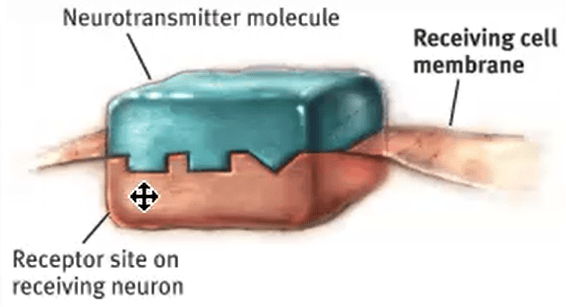

There are mechanisms that work to inhibit or enhance the activity of neurotransmitters. The first one we are going to learn about is called an antagonist. An antagonist is a molecule that will work to inhibit neurotransmitter activity. It has a structure similar enough to the neurotransmitter to occupy its receptor site and block its action, but not similar enough to stimulate the receptor. An example of an antagonist is Curare which inhibits acetylcholine receptors. Curare poisoning paralyzes its victims by blocking acetylcholine receptors involved in muscle movement. By making sure that muscle cells are not reaching their required action potential, curare ensures that the muscles are not being triggered to engage in movement.
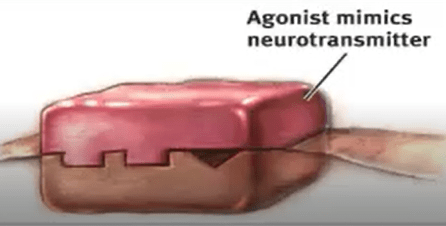
An agonist, also known as a synergist, works in the opposite way of an antagonist, which means that it excites the receiving neuron. An agonist is similar enough in structure to the neurotransmitter molecule that it mimics its effects on the receiving neuron. Morphine is a great example of an agonist. Morphine mimics the action of endorphins by stimulating receptors in brain areas involved in mood and pain sensations. So in this scenario, we have a molecule that is not supposed to activate our pain receptors but is still activating them, and in this case, it is for a good cause because Morphine helps to reduce pain sensation.
There are a lot of different neurotransmitters that we have in our bodies. Acetylcholine(ACh) enables muscle action, learning, and memory. Dopamine influences learning, movement, attention, and emotion. Serotonin affects mood, hunger, sleep, and arousal. Norepinephrine helps to control alertness and arousal. Glutamate is a major excitatory neurotransmitter involved in memory. When these neurotransmitters are functioning properly, they are able to effectively perform their specialized job.
However, when neurotransmitters malfunction, they are usually associated with and are a major cause of diseases. When neurons that produce acetylcholine deteriorate, the acetylcholine neurotransmitters will malfunction, resulting in Alzheimer’s disease. Excess dopamine receptor activity is linked to Schizophrenia. When the brain is starved of dopamine, it produces tremors and decreased mobility, which are symptoms characterized by Parkinson’s disease. When there is an undersupply of serotonin, it is linked to depression. Prozac and other antidepressant drugs raise serotonin levels back to normal and they regulate the neurotransmitter levels in the body. An example of a malfunction of norepinephrine is an undersupply of the neurotransmitter which can result in depression as well. An oversupply of glutamate can overstimulate the brain, which in turn produces migraines and seizures. This is why some people avoid monosodium glutamate (MSG) in food.
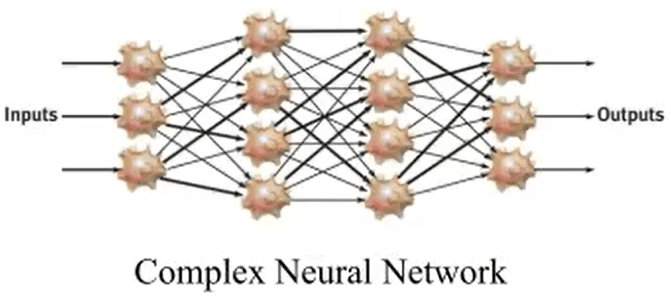
Let’s move on to talking about the nervous system and its components. There are two parts that make up the nervous system, the central nervous system and the peripheral nervous system. The central nervous system is made of two major parts, the brain and spinal cord. However, a bunch of interconnected neurons that form networks in the brain is actually what composes the basic structure of the central nervous system. These networks are incredibly complex and are modified with growth and experience. Our nervous system is malleable because it changes and adapts over time with age, which is crucial since humans need to be able to learn and think in new ways as times change, and learn from past mistakes to make their lives easier.
The peripheral nervous system is basically everything else, meaning that it is composed of the sensory and motor neurons that connect the central nervous system to the rest of the body. When comparing the two systems by size, the peripheral nervous system is significantly larger. It is also important to remember that the peripheral nervous system is broken down into several subsystems. One of these subsystems is the somatic nervous system which controls the voluntary movement of skeletal muscles. We also have the autonomic nervous system, which controls the self-regulated actions of internal organs, glands, and other muscles. The autonomic nervous system is further broken down into the sympathetic nervous system and the parasympathetic nervous system.
The sympathetic nervous system is responsible for arousing the body and mobilizing its energy in stressful situations. This is the reason the sympathetic nervous system is called the “fight or flight system”. This means that when the sympathetic nervous system is active, it dilates our pupils, accelerates the heart beat, inhibits digestion, stimulates glucose release from the liver, releases the bladder, and stimulates the secretion of epinephrine and norepinephrine from the adrenal glands. Everything that the sympathetic nervous system controls is involved in controlling parts of our body that will make us more alert, which means increasing the involvement of one part of the body while decreasing the function of another body part, such as digestion, which focuses all of the body’s attention on the task at hand, such as running away from an apex predator. Your body doesn’t need to be digesting food in a dangerous situation because all of your body’s energy should be focused on escaping an apex predator rather than breaking down food.
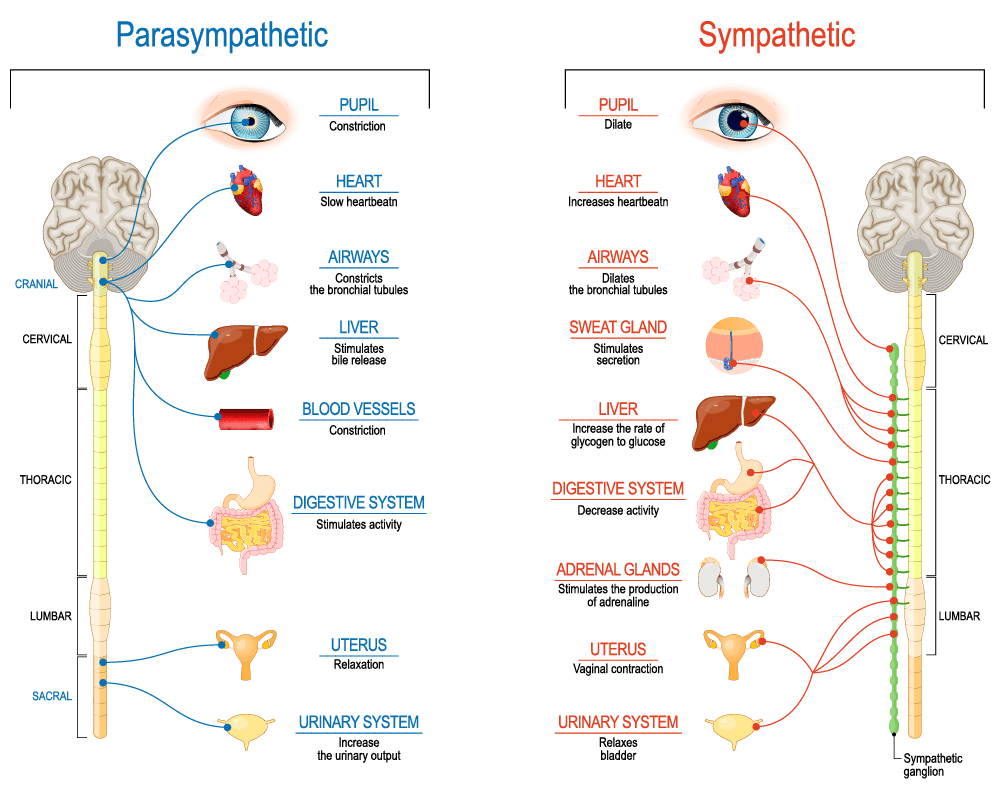
The parasympathetic nervous system is also a branch of the autonomic nervous system and it is responsible for calming the body and conserving its energy. This is why this system is called the “rest and digest system”. The parasympathetic nervous system does the opposite of the sympathetic nervous system, which means it contracts the pupils, slows down the heart rate, stimulates digestion, stimulates the gallbladder, and contracts the bladder. When comparing both the parasympathetic and sympathetic nervous systems, we can say that the parasympathetic system is involved when the body is in a relaxed state, while the sympathetic nervous system is involved when the body is in an anxious state, usually due to fear or danger.
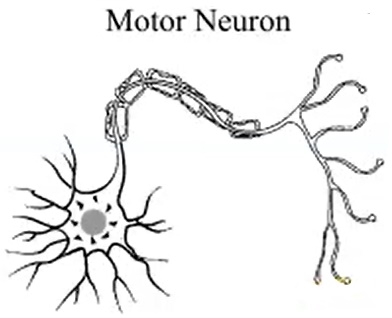
The nervous system consists of all the body’s nerve cells, which are also known as neurons. The nervous system is basically the body’s speedy, electrochemical communication system. When we talk about the nervous system, we need to always talk about nerves. Nerves, which are neural cables containing many axons, are a part of the peripheral nervous system, which means that they connect muscles, glands, and sensory organs to the central nervous system.
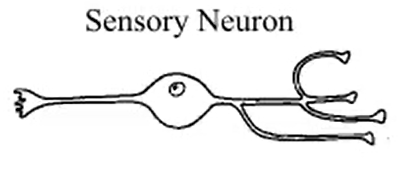

There are three main types of neurons that are differentiated by their shape and function. Motor neurons are the standard type of neuron that people are most familiar with. Motor neurons carry outgoing information from the central nervous system (CNS) to the various muscles and glands in our body. These neurons are what we call “affectors” because they are the cells that actually do the job of transmitting signals to the parts of the body. Sensory neurons carry incoming information from sensory receptors, like those in our mouth and ears, to the central nervous system for processing. Interneurons are very distinct from other neurons because their only job is to connect two neurons together by acting as an intermediary between two different neuron types.
The nervous system is what controls what we do and how we do it, and the nervous system itself is broken down into smaller components which work together to allow the entire system to function. In the next blog, we will be focusing on the inner workings of reflexes and reactions.
 BioLogically