
The cell is the smallest unit of biological organization that can perform all the activities necessary for life. In the 1830s, the famous cell theory was first developed by botanist Mathias Schleiden and zoologist Theodore Schwann. The theory states that all living organisms are composed of the basic units of life, cells, and all organism’s actions are propelled by the cell’s functions. For example, your eye’s movement as you read this sentence is made possible by muscle and nerve cells. Even a process like recycling carbon atoms, which occurs on a global scale, results from cellular functions, including the photosynthetic activity of chloroplasts, an organelle in plant cells.
It is important to understand that all cells share certain characteristics. For example, all cells are surrounded by a semi-permeable membrane that regulates the passage of materials in and out of the cell. Nonetheless, all cells have been separated into two main groups: prokaryotic and eukaryotic. The cells of two groups of microorganisms, bacteria, and fungi, are considered to be prokaryotic. On the other hand, all other forms of life, such as animals and plants are made up of eukaryotic cells.
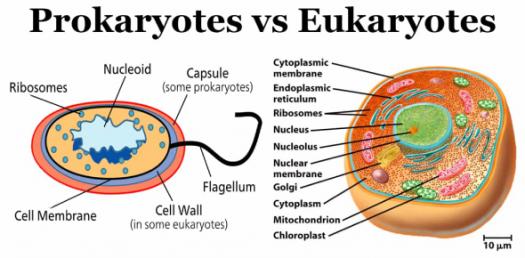
Let’s start with a eukaryotic cell. These cells contain organelles, each of which are enclosed by their own membrane. This is one of the defining features of a eukaryotic cell. Some organelles, such as the membrane-bound DNA-containing nucleus, the Golgi apparatus, and the mitochondria, are found in all eukaryotic cells, while other more specific organelles pertain to particular cell types. For instance, chloroplasts are organelles that only exist in cells that carry out photosynthesis, like plant cells. You would not find chloroplasts in any human cell, because we don’t use photosynthesis to produce food and energy for our body. Conversely, prokaryotic cells do NOT have a nucleus or other membrane-enclosed organelles, specifically the mitochondria. This is the major difference between these two cell categories. Prokaryotic cells are also generally smaller than eukaryotic cells.
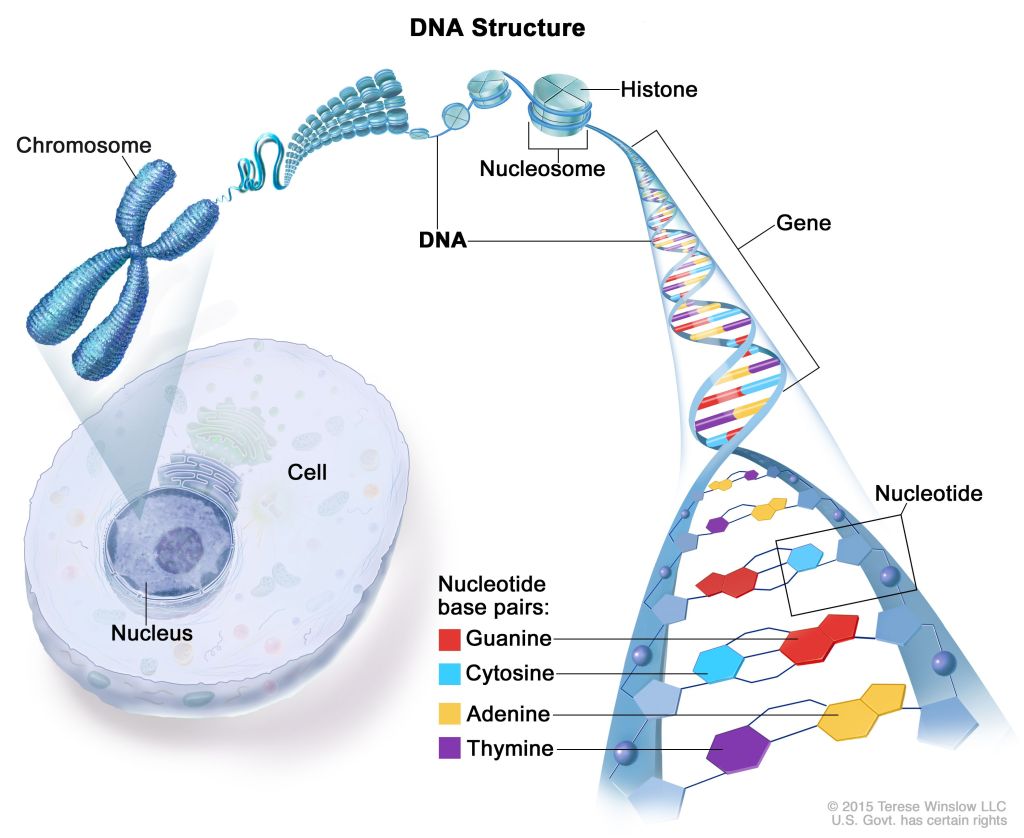
Now before we digress into understanding DNA and its function, it is crucial to understand that all of life’s processes occur through the expression and transmission of genetic material. Chromosomes are structures within our cells that carry genetic information in the form of DNA, which stands for deoxyribonucleic acid. Before a cell goes through the division process, its DNA is replicated. By the time the cell finishes dividing, each of the two daughter cells inherits a complete set of chromosomes identical to that of the parent cell. Genes, found in our DNA and transmitted from parent to offspring, are the units of inheritance in biology. Genes encode information that is necessary to the creation of proteins. Proteins are synthesized within the cell and they establish a cell’s identity and functions. A human being begins as a single cell with DNA and encoded genes inherited from their parents. The replication of DNA involved in the cell division process from that single cell created the trillions of cells in your body. Furthermore, as cells mature and continue to divide, they direct the development of the body and its functions.
DNA’s complex molecular structure enables it to store genetic information. DNA is composed of two chain-like structures called strands, which are arranged in the form of a double helix. Now, each strand is made up of four kinds of chemical building blocks called nucleotides which include Adenine(A), Thymine(T), Guanine(G), and Cytosine(C). Nucleotides are the building blocks of DNA. These 4 nucleotides arranged in specific sequences encode genetic information. The way DNA encodes information is similar to the way we arrange letters in a certain pattern to create words. For example, let’s take the letters R, A, and T. These letters can be arranged to form the words RAT, ART, and TAR. Though we are using the same letters to create words, these words have very different meanings based on the way the letters are arranged. This situation is the same as how encoding DNA works, but with a 4 letter pattern alphabet instead.
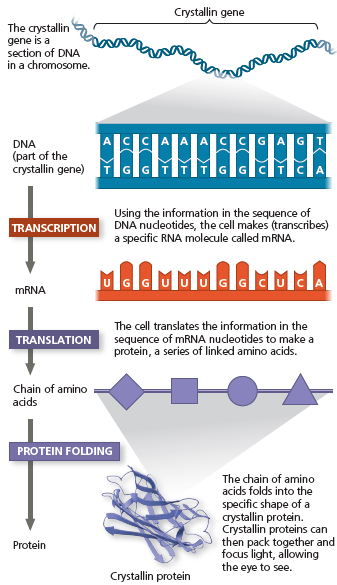
The DNA sequence provides the blueprint for the formation of a protein. For example, a human gene may require the formation of a protein that strengthens antibodies. The DNA sequence would set up the “code” for the specific protein to be created. Proteins are crucial to the growth, maintenance, and activity of cells. Protein encoding genes control protein production through RNA. RNA, also known as ribonucleic acid, is the intermediary between DNA and protein formation. During a process called transcription, the nucleotides that make up a DNA strand are transcribed into mRNA sequences. Like DNA, RNA is composed of nucleotides, but there is a difference in the type of nucleotides encoded. RNA is composed of Adenine, Guanine, Cytosine, and Uracil(U). DNA has Thymine instead of Uracil. Now, the mRNA sequence undergoes a process known as translation, where it is translated into a pattern of protein building blocks called amino acids. Once the amino acid chain, also known as a polypeptide chain, is completed, it forms a specific protein that has its own unique shape, function, and characteristics. Gene expression is the entire process by which genetic information directs the creation of a cellular product, such as a protein.
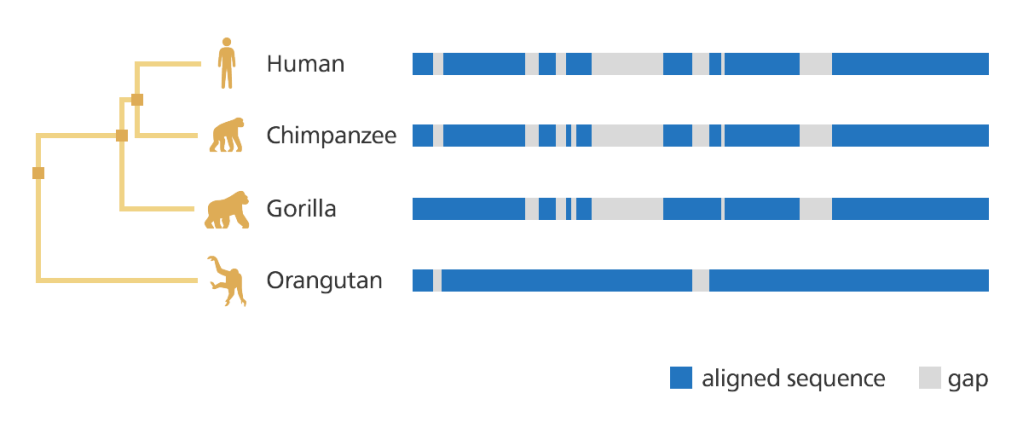
When carrying out gene expression, all forms of life carry out the same genetic code. This code involves a certain sequence of nucleotides that says the same thing in one organism as it does in another. Differences between organisms reflect differences in their respective nucleotide sequences and not differences between their genetic codes. The idea of genetic codes is evidence of the fact that all life is related. By comparing the gene sequences that code for a specific protein from various different species, we would be able to gain information about that protein as well as the genetic relationships between different species.
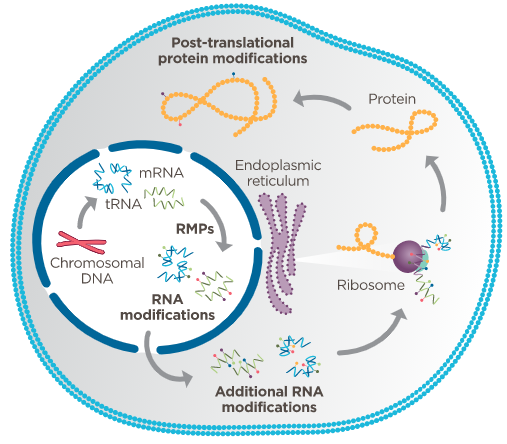
The most common mRNA molecules are translated into proteins, however, other cellular RNAs function differently. Researchers have uncovered that some types of RNA are actually cellular components from protein. Additionally, over recent decades, scientists have discovered that RNA plays other roles in a cell such as controlling the function of genes that encode proteins. Genes are what give different RNA molecules the ability to carry out various functions. By encoding the process for the creation of proteins and RNAs as well as being a moderator in the cell division process, DNA ensures that the inheritance of genes is carried out correctly from generation to generation.
All of the various genetic instructions that an organism inherits is called its genome. A normal human cell contains 2 sets of similar chromosomes, with each set having approximately 3 billion nucleotide pairs of DNA. Through the past three decades, the pace at which researchers are able to identify and analyze genome sequences has accelerated due to the addition of modern technology. The genome sequence, which is “the entire sequence of nucleotides for a member of a species”, is now known for humans, and thousands of plants, animals, bacteria, and archaea. In order to understand the vast amounts of data from genome sequencing projects, scientists are using a systems biology approach at the cellular and molecular level. Scientists are using an approach known as genomics where they research whole sets of DNA from various species as once, rather than investigate a single gene at a time. Similarly, proteomics is the study of protein sets and their properties. It is also important to remember that an entire set of proteins expressed by a given cell, tissue, or organism is known as a proteome.
There are three research developments that have made genomic and proteomic approaches possible. One is “high throughput”, which has tools that can analyze biological samples at a rapid pace. The second development is the use of bioinformatics, the usage of computational tools to store and analyze huge volumes of data that are produced by the methods. The third development is the formation of research teams, groups of specialists from various fields such as computer scientists, chemists, engineers, and biologists. The goal of researchers who are part of these teams is to learn all about how the activities of RNA, proteins, and DNA are coordinated in individual cells and in entire organisms. In the next blog, we will discuss the processes involving energy and matter, both of which hold great importance in biology.
 BioLogically